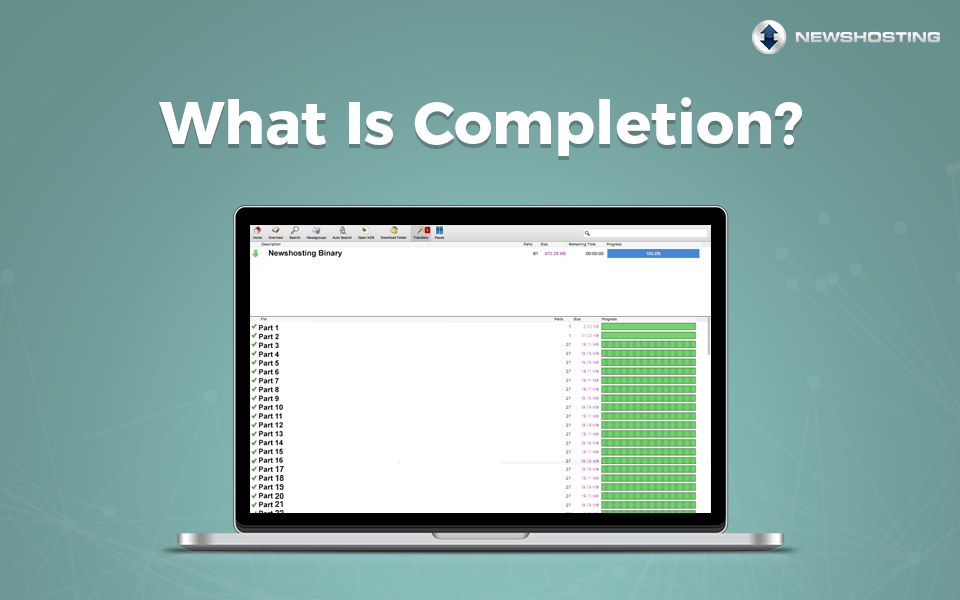
Usenet is a passionate community. Millions of people interact daily, sharing ideas, information, and opinions. The amount of those interactions that is kept accessible is critical to a positive Usenet experience. That’s where completion comes in. So, what is a Usenet completion rate, and how does it differ from retention? Here is the short explanation.
What Is Completion?
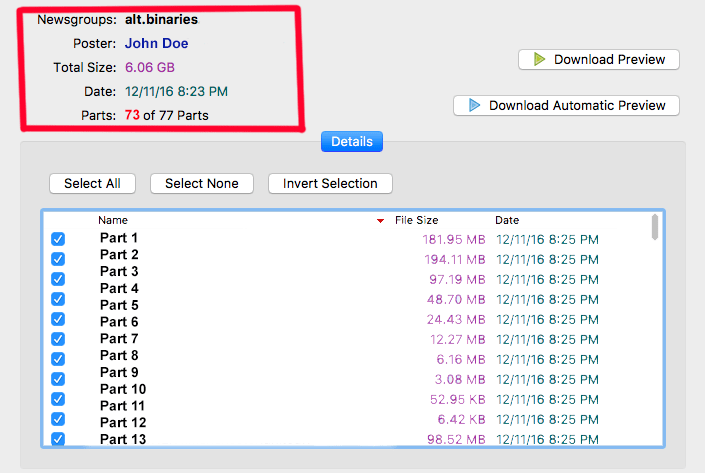
Completion describes how much of everything posted to Usenet a provider actually holds. It is not a property of one machine: a provider like Newshosting runs many servers that work together as one service, and completion measures how many articles that service can give you, versus how many articles were posted to Usenet within its retention window. In theory, a provider could hold every Usenet article. Usenet, though, is such a lively network. This means that while a provider may get extremely close to holding all available articles, no one can honestly guarantee every single one. Many factors can keep a provider from holding every article. Those factors include downtime, data loss, and even problems with feeding servers, to name a few.
Completion is easy to confuse with retention, but they answer different questions. Retention is how far back in time a provider’s archive reaches, measured in days; completion is how much of what was posted within that window is actually there, with no missing parts. A provider can advertise years of retention and still leave gaps. What retention is and why it matters is explained on What is Article Retention?
Completion Rate
Completion rate is the concept of completion expressed as a percentage. It refers to the share of the articles posted within a provider’s retention window that the provider can deliver complete, with no missing parts. For example, if a provider has a completion rate of 90 percent, 90 percent of the articles posted within its retention window are fully available, and the rest are missing parts. Saying a certain Usenet provider has a low completion rate means it’s missing quite a few of them. A provider with poor-quality servers and low completion will leave you with frequently missing parts and failed article retrievals. Users who go with a lower-tier Usenet provider are the most sensitive to poor completion, because an article with missing parts cannot be retrieved in full no matter how fast the connection.
A practical example: a discussion thread of 20 articles, or a large article posted in 20 parts, on a provider with 90 percent completion will typically be missing two of them. At 99.99% completion, one part in ten thousand is missing, which in practice means the thread or the article is complete.
Newshosting Completion
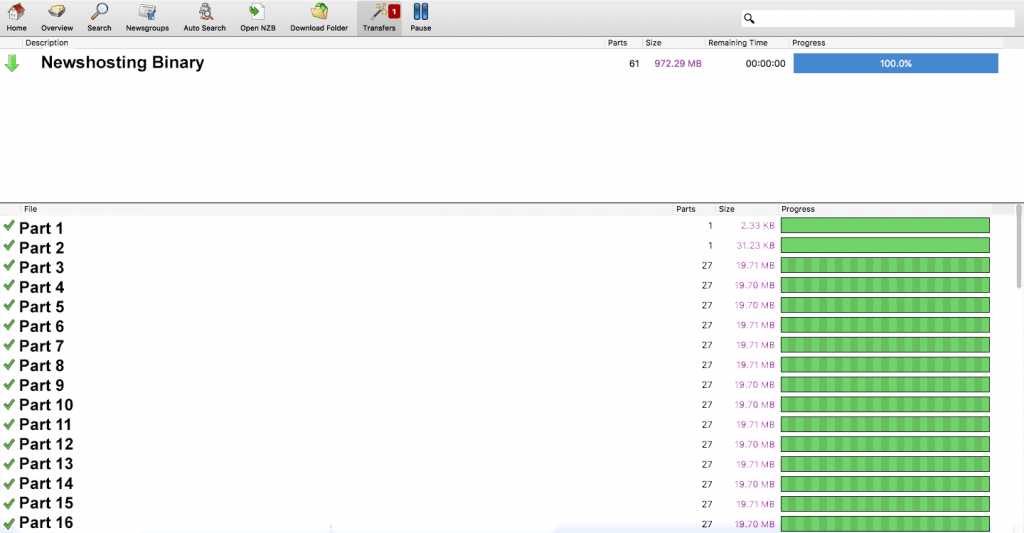
If you wish to avoid completion trouble altogether, look no further than Newshosting. Newshosting offers the best completion rates on the market, thanks to:
99%+ completion rate
99.99% completion rate: With access to over 120,000 uncensored newsgroups, chances are you’ll find what you’re looking for. Newshosting’s list of uncensored newsgroups is always growing, bringing you all the best completion available.
Industry-leading article retention
Newshosting’s article retention has grown from 3,000 days in 2016 to 6636+ days today. Every day, we add another day to our archive, with no plans of stopping. Article retention and completion go hand in hand: the more articles a provider retains, the higher its completion rate, and the less likely you are to meet an incomplete or missing post. Higher retention also improves the chances of accessing articles, old and new.
Server farms across North America and Europe
Newshosting owns and operates its own multi-gigabit server farms, located throughout the United States and Europe. Several locations add redundancy and resilience: if one has a problem, another keeps your access running, and the network delivers the fastest Usenet. How that network is built is on Newshosting’s fast Usenet page.